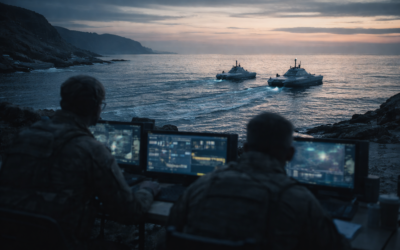
The Royal Navy has hybrid fleet to describe its crewed and uncrewed future. But when the Army starts generating maritime effects using uncrewed systems, something different is happening that hybrid does not quite capture. I want to propose a term for it.
Government
Fidelity Over Distance
The problem in defence software delivery was never really about distance. It was always about how much of the real problem survives the journey from operator to engineer. LLMs change what fidelity is achievable when physical proximity is not possible.
The Tactician and the Technician
Defence software delivery consistently fails because of the structural distance between the engineer who builds and the operator who uses. The case for forward deployment, why it works, and why the commercial model is the hardest barrier to fix.
There Is More to Readiness Than Fight Tonight
Fight tonight is the dominant phrase in UK defence readiness right now. But shorthand compresses things. This post unpacks what genuine readiness looks like across five dimensions, and asks which ones are actually being built for.
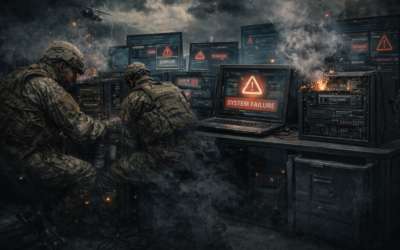
Resilience is not Redundancy. What Catastrophic Failure Actually Teaches You.
Redundancy delays failure. It does not prevent it. Drawing on two real MOD recovery operations, this post sets out what genuine digital resilience actually looks like and why most digital programmes are dangerously underprepared for failure.
What Building a Startup Taught Me About Delivery in Defence
Running a startup teaches accountability in a way no programme governance framework can. This post draws on experience building and selling a company to examine what large defence programmes get structurally wrong about ownership and consequence.